Vitamin C in Skincare — L-Ascorbic Acid vs Derivatives, Stability, pH, and the Evidence Per Formulation
Complete vitamin C derivative comparison with stability data, pH requirements, efficacy relative to L-ascorbic acid, concentration-to-effect analysis, oxidation indicators, and the formulation science that determines whether your vitamin C serum actually works.
Your Vitamin C Serum Turned Orange — That Is Oxidized L-Ascorbic Acid Applying Pro-Oxidant Damage to Your Skin Instead of Antioxidant Protection
L-ascorbic acid (LAA) is the gold-standard topical antioxidant. The evidence for its efficacy in photoprotection, collagen synthesis stimulation, and hyperpigmentation reduction is among the strongest in dermatology — when the molecule is intact. The problem is that L-ascorbic acid is one of the most unstable molecules in skincare formulation. It oxidizes on contact with air, degrades in light, loses efficacy above pH 3.5, and converts to dehydroascorbic acid and then to erythrulic acid — the compound that turns your serum orange and actively generates free radicals on your skin.
An oxidized vitamin C serum is worse than no vitamin C serum. It applies a pro-oxidant to your skin while you believe you are applying an antioxidant.
The industry response to LAA instability is vitamin C derivatives — molecules that are more stable but must be converted to ascorbic acid by skin enzymes (similar to the retinoid conversion problem). Some derivatives are genuinely effective alternatives. Others are marketing solutions that provide no meaningful ascorbic acid activity. This guide provides the derivative-by-derivative comparison.
L-ascorbic acid — the gold standard and its constraints
| Parameter | Requirement | What happens outside range | Why this matters |
|---|---|---|---|
| pH | <3.5 (optimal 2.5-3.0) | Above pH 3.5: ionization prevents skin penetration; above pH 4.0: rapid oxidation | Most water-based products are pH 4.5-6.0 — LAA is unstable in most formulations |
| Concentration | 10-20% for clinical effects | Below 8%: subtherapeutic. Above 20%: increased irritation without additional efficacy (plateau at 20%) | Many products at 5% or below — insufficient for claimed effects |
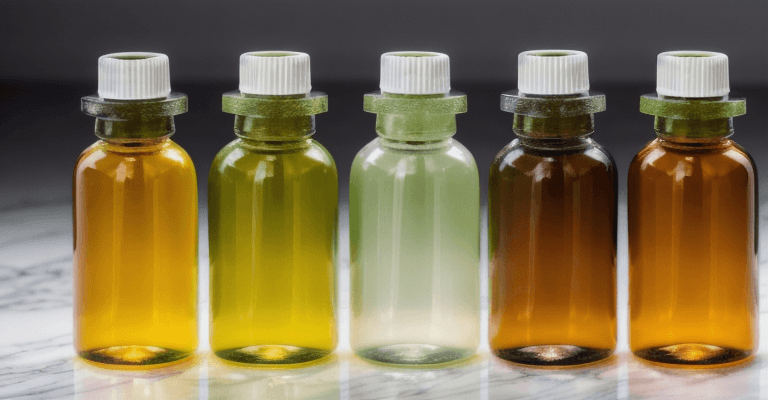
| Light exposure | Opaque packaging essential | UV and visible light catalyze oxidation; 30-50% degradation in clear packaging within weeks | Clear dropper bottles are the worst possible packaging for LAA |
| Air exposure | Airless packaging or anhydrous formulation | Oxygen converts LAA → dehydroascorbic acid (DHAA) → erythrulic acid (irreversible, pro-oxidant) | Once opened, clock is ticking — even airless pumps allow some air |
| Temperature | Store below 25°C / 77°F; refrigeration extends shelf life | Every 10°C increase roughly doubles degradation rate | Bathroom storage (30°C+, humidity) is hostile to LAA stability |
| Co-formulants | Ferulic acid + vitamin E (CE Ferulic concept) extend stability and efficacy | Without stabilizers, half-life in solution may be as short as 1-4 weeks | The Duke patent (CE Ferulic) showed 8x photoprotection boost with this combination |
Concentration-to-effect for L-ascorbic acid
| Concentration | Collagen synthesis | Photoprotection | Hyperpigmentation | Irritation risk | Evidence tier | Notes |
|---|---|---|---|---|---|---|
| 5% | Minimal | Mild | Minimal | Very low | CT | Below therapeutic threshold for most effects |
| 8% | Mild | Moderate | Mild | Low | CT | Lower end of efficacy |
| 10% | Moderate | Moderate-good | Moderate | Low-moderate | RCT | Minimum for clinical-grade effects |
| 15% | Good | Good | Good | Moderate | RCT | Common “clinical strength” concentration |
| 20% | Maximum demonstrated | Maximum demonstrated | Maximum demonstrated | Moderate-high | RCT | Plateau — no additional benefit above 20% (Pinnell 2001) |
| 25-30% | Same as 20% | Same as 20% | Same as 20% | High | CT | Increased irritation without additional efficacy |
The 20% ceiling: Pinnell et al. (2001) demonstrated that skin tissue saturation occurs at 20% LAA concentration. Higher concentrations increase irritation without increasing efficacy. Products marketed at 25% or 30% exploit the “more is better” assumption with no evidence of additional benefit.
Vitamin C derivative comparison — stability, efficacy, and conversion
| Derivative | INCI name | Water/oil soluble | Stability | pH range | Conversion to ascorbic acid | Relative efficacy (LAA = 100) | Irritation | Cost |
|---|---|---|---|---|---|---|---|---|
| L-ascorbic acid (LAA) | Ascorbic acid | Water | Very poor | <3.5 required | N/A (is the active form) | 100 | Moderate-high at >15% | Moderate (raw material cheap; formulation expensive) |
| Ascorbyl glucoside (AA2G) | Ascorbyl glucoside | Water | Good | 4.0-7.0 | Enzymatic (glucosidase) — moderate conversion | 30-50 | Low | Moderate |
| Sodium ascorbyl phosphate (SAP) | Sodium ascorbyl phosphate | Water | Good | 5.0-7.0 | Enzymatic (phosphatase) — moderate conversion | 30-50 | Very low | Moderate |
| Magnesium ascorbyl phosphate (MAP) | Magnesium ascorbyl phosphate | Water | Good | 5.5-7.0 | Enzymatic (phosphatase) — slow conversion | 20-40 | Very low | High |
| Ascorbyl tetraisopalmitate (ATIP) | Ascorbyl tetraisopalmitate | Oil | Excellent | 4.0-7.0 | Enzymatic (esterase) — slow conversion | 20-40 | Very low | High |
| 3-O-Ethyl ascorbic acid (3-O-EA) | 3-O-ethyl ascorbic acid | Water + oil (amphiphilic) | Good | 4.0-6.0 | Direct activity + enzymatic conversion | 50-70 | Low | High |
| Ethyl ascorbic acid (EAA) | Ethyl ascorbic acid | Water | Moderate-good | 4.0-5.5 | Enzymatic (esterase) | 40-60 | Low-moderate | High |
| Ascorbyl palmitate | Ascorbyl palmitate | Oil | Moderate | 4.0-6.0 | Enzymatic (esterase) — poor skin penetration | 10-20 | Very low | Low |
| Tetrahexyldecyl ascorbate (THDA) | Tetrahexyldecyl ascorbate | Oil | Good | 4.0-6.0 | Enzymatic (esterase) — lipophilic, good penetration | 40-60 | Low | Very high |
The derivative tradeoff: Every derivative solves LAA’s stability problem by sacrificing some efficacy. The most stable derivatives (ascorbyl palmitate, MAP) have the weakest evidence for clinical effects. The derivatives closest to LAA efficacy (3-O-ethyl ascorbic acid, THDA) are expensive and less widely available. There is no derivative that matches LAA’s efficacy at LAA’s price with good stability — the tradeoff is real.
Oxidation detection — when to discard your vitamin C product
| Indicator | Fresh product | Early oxidation | Significant oxidation | Discard |
|---|---|---|---|---|
| Color (LAA serum) | Clear to very pale yellow | Light yellow | Orange | Dark orange/brown — pro-oxidant |
| Color (LAA with ferulic acid) | Light amber/golden (ferulic acid has color) | Slightly darker amber | Dark amber/orange | Brown — ferulic acid also oxidized |
| Smell | None to mild acidic | Slightly metallic | Strong metallic or sour | Hot-dog/sulfur smell — decomposition products |
| pH (LAA serum) | 2.5-3.5 | 3.0-4.0 (rising) | 4.0-5.0 | >5.0 — pH rise indicates LAA depletion |
| Texture | Watery to light serum | Same | May become slightly thicker | Viscosity change indicates degradation |
| Skin reaction | Mild tingling (normal for low pH) | Same | Increased stinging or irritation | Burning — stop use immediately |
The color test for LAA serums: Any serum that has turned orange has lost a significant percentage of its LAA content. The orange/brown color comes from erythrulic acid and other degradation products — these are pro-oxidants. Continuing to use an oxidized vitamin C serum applies free radical-generating compounds to your skin. When your serum turns orange, discard it.
Formulation architecture — what determines real-world efficacy
| Formulation type | LAA stability | Shelf life (unopened) | Shelf life (opened) | Best for | Example products |
|---|---|---|---|---|---|
| Water-based serum, pH 2.5-3.0 | Poor (1-6 months) | 6-12 months (with stabilizers) | 1-3 months | Maximum efficacy if used quickly | CE Ferulic-type serums |
| Anhydrous (water-free) serum | Good (no water = no hydrolysis) | 12-18 months | 3-6 months | Stability + efficacy balance | Silicone or oil-based LAA suspensions |
| Powder (mix before use) | Excellent (dry = maximum stability) | 24+ months | Days-weeks after mixing | Maximum freshness guarantee | LAA powder + hyaluronic acid serum (mix daily) |
| Encapsulated LAA | Good (protected from environment) | 12-18 months | 3-6 months | Extended stability with good delivery | Liposomal or silica-encapsulated LAA |
| Derivative in cream base | Excellent (derivatives + occlusive base) | 18-24 months | 6-12 months | Long-term stability, sensitive skin | MAP, SAP, or AA2G in moisturizer |
The CE Ferulic synergy — why it works
| Component | Concentration | Role | Solo photoprotection | Combined photoprotection |
|---|---|---|---|---|
| L-ascorbic acid | 15% | Primary antioxidant — scavenges free radicals | 4x MED increase (Pinnell 2001) | — |
| Vitamin E (α-tocopherol) | 1% | Lipid-phase antioxidant — protects cell membranes | 2x MED increase | — |
| Ferulic acid | 0.5% | Plant antioxidant — stabilizes both C and E; absorbs UV | Minimal alone | 8x MED increase (synergistic) |
| Combined | 15% C + 1% E + 0.5% ferulic | Synergistic trio — water + lipid phase protection | — | 8x MED increase — double the protection of C alone |
The CE Ferulic combination (patented by SkinCeuticals, now available in generic formulations) remains the most evidence-supported topical antioxidant system. The synergy is not additive — ferulic acid doubles the photoprotection of C+E combined.
Decision framework — which vitamin C for which situation
| Your situation | Best choice | Concentration | Why |
|---|---|---|---|
| Maximum anti-aging efficacy, willing to manage stability | L-ascorbic acid serum (CE Ferulic type) | 15-20% | Strongest evidence; highest efficacy |
| Sensitive skin, cannot tolerate low pH | Sodium ascorbyl phosphate or ascorbyl glucoside serum | 10-20% | Effective at skin-friendly pH (5-7); low irritation |
| Want vitamin C in a moisturizer (not separate step) | Magnesium ascorbyl phosphate or ascorbyl tetraisopalmitate in cream | 5-10% | Stable in cream formulations; gentle |
| Oily skin, prefer lightweight product | 3-O-ethyl ascorbic acid serum | 10-15% | Amphiphilic — penetrates well; moderately effective |
| Maximum stability, infrequent use | LAA powder (mix fresh before use) | 15-20% (self-mixed) | 100% potency guaranteed at point of use |
| Budget option with some vitamin C benefit | Ascorbyl glucoside in drugstore moisturizer | 2-5% | Stable, cheap, mild benefit for brightening |
| Dark spots / hyperpigmentation focus | LAA 15-20% at pH 2.5-3.0 + niacinamide 4-5% (different product or time) | Combined approach | LAA inhibits tyrosinase; niacinamide inhibits melanosome transfer |
How to apply this
Use the ingredient-checker tool to identify which form of vitamin C your product contains and its INCI position — “vitamin C serum” covers everything from 20% LAA at pH 2.8 to 0.5% ascorbyl palmitate in a moisturizer.
If using LAA, protect it. Store in the refrigerator, use within 2-3 months of opening, and discard when it turns orange. The product you open today is not the product you use in month four — LAA degrades continuously.
Apply vitamin C in the morning, under sunscreen. Vitamin C provides photoprotection (boosts sunscreen efficacy by 2-8x depending on formulation). Using it at night wastes its UV-protective benefit.
Don’t chase concentration above 20%. Skin tissue saturates at 20% LAA. Products at 25-30% charge more for additional irritation, not additional efficacy.
Consider derivatives if stability is your barrier. A fresh 10% ascorbyl glucoside serum delivers more ascorbic acid activity than an oxidized 20% LAA serum. Stability matters more than peak concentration if your product degrades before you finish it.
Honest limitations
Relative efficacy percentages (LAA = 100) are estimates based on comparative studies and conversion rate data — direct head-to-head studies between all derivatives at equivalent concentrations are sparse. The CE Ferulic synergy data comes primarily from the Duke University research group that patented the combination — independent replication exists but is less extensive. Conversion rates of derivatives to ascorbic acid vary by skin pH, enzyme activity, and individual biology — the rates cited are population averages. Product shelf-life data assumes proper storage; real-world conditions (bathroom humidity, temperature fluctuation, light exposure) reduce stability. The “20% ceiling” from Pinnell 2001 tested tissue levels in ex vivo skin — in vivo saturation kinetics may differ slightly. Oxidation detection by color is reliable for LAA but some derivatives (THDA, ATIP) do not change color when degraded. The powder-mixing approach guarantees freshness but introduces user error in dosing and pH management. Price premium for patent-protected formulations (SkinCeuticals CE Ferulic) versus generic CE Ferulic serums varies by region and is not necessarily correlated with formulation quality.

Continue reading
AHA vs BHA — Glycolic, Salicylic, Lactic Acid Compared by Molecular Size, Penetration, and Evidence
Chemical exfoliant comparison by molecular weight, penetration depth, optimal pH and concentration, evidence per skin concern, combination safety matrix, and the over-exfoliation threshold that most routines exceed.
Ceramides and Barrier Repair — Lipid Ratios, Barrier Function Science, and What 'Ceramide Complex' Actually Means
Skin barrier lipid ratio table showing optimal ceramides-to-cholesterol-to-fatty-acids proportions, ceramide classification by type, barrier damage markers, repair timeline data, and the evidence gap between ceramide marketing and clinical barrier restoration.
Dental Product Ingredients — Fluoride Concentrations, Whitening Agents, and the Evidence Behind Every Claim
Fluoride concentration comparison between OTC and prescription products in ppm, whitening agent efficacy data with shade change measurements, sensitivity ingredient mechanisms, and the evidence gap between dental product marketing and clinical outcomes.