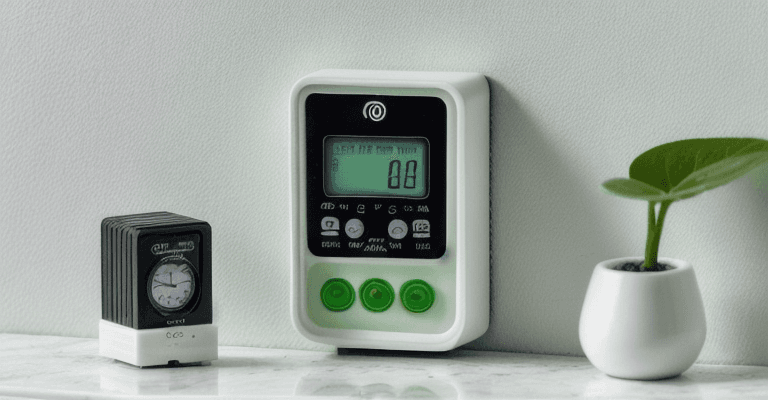
Indoor Air Quality — PM2.5, VOCs, CO2 Thresholds and the Numbers That Actually Determine Whether Your Air Is Safe
Pollutant threshold comparison across WHO, EPA, and OSHA with health-effect levels per concentration, PM2.5 source identification, VOC category breakdown, CO2 as ventilation proxy, and the measurement methods that separate real data from consumer device noise.
Your Indoor Air Is 2-5x More Polluted Than Outdoor Air — and You Spend 90% of Your Time Indoors
The EPA’s own research concludes that indoor air pollutant levels are typically 2 to 5 times higher than outdoor levels — occasionally exceeding 100 times outdoor concentrations for specific compounds immediately after certain activities (painting, cleaning with bleach, cooking on gas). Americans spend approximately 90% of their time indoors. The arithmetic is simple: most of your lifetime pollution exposure happens inside your home, not outside it.
Yet most people who check air quality check outdoor AQI — a number that describes the air they breathe for 10% of their day. The air they breathe for the other 90% goes unmeasured.
Indoor air quality (IAQ) is governed by three pollutant categories that behave differently, come from different sources, and require different interventions: particulate matter (PM2.5 and PM10), volatile organic compounds (VOCs), and carbon dioxide (CO2 as a ventilation adequacy proxy). Each has established health thresholds from regulatory bodies — but these thresholds differ significantly between organizations, and the consumer air quality devices that claim to measure them vary from reasonably accurate to essentially decorative.
Particulate matter — PM2.5 and PM10 thresholds by standard
PM2.5 (particulate matter ≤2.5 micrometers) is the most health-relevant indoor air pollutant. These particles are small enough to penetrate deep into the lungs and enter the bloodstream. Long-term exposure is associated with cardiovascular disease, respiratory disease, and premature mortality — with no established safe threshold (the dose-response curve is linear down to very low concentrations).
| Standard / Organization | PM2.5 Annual Mean (µg/m³) | PM2.5 24-hour Mean (µg/m³) | PM10 Annual Mean (µg/m³) | PM10 24-hour Mean (µg/m³) | Context |
|---|---|---|---|---|---|
| WHO 2021 (current) | 5 | 15 | 15 | 45 | Most stringent; based on latest epidemiological evidence |
| WHO 2005 (previous) | 10 | 25 | 20 | 50 | Many countries still reference this older standard |
| US EPA NAAQS (2024) | 9 | 35 | — | 150 | Tightened from 12 µg/m³ annual in 2024; outdoor standard but applied as indoor reference |
| EU Directive 2008/50 | 25 (reducing to 10 by 2030) | — | 40 | 50 | Transitioning toward WHO 2021 alignment |
| ASHRAE 62.1 (indoor) | — | 35 (follows EPA) | — | 150 | Building ventilation standard; references EPA outdoor limits |
| WELL Building Standard | — | 15 | — | 50 | Premium building certification; aligns with WHO 2021 |
| Typical well-ventilated home | 5-15 | — | 10-30 | — | Baseline without active purification |
| Home during cooking (gas stove) | 50-300+ | — | 100-500+ | — | Spikes can exceed outdoor AQI “hazardous” thresholds |
| Home during cooking (electric) | 20-80 | — | 40-150 | — | Lower than gas but still significant |
| Home with smoker | 30-100+ | — | 50-200+ | — | Persistent elevation, not just spike |
The WHO 2021 reality check: The WHO’s 2021 annual guideline of 5 µg/m³ for PM2.5 is so stringent that most urban homes exceed it even with good ventilation and no indoor sources. This does not mean the guideline is wrong — it means the health-optimal level is lower than most people achieve. The question is not “am I below the threshold?” but “how far above am I, and what can I reduce?”
Common indoor PM2.5 sources and their contribution
| Source | PM2.5 spike (µg/m³ above baseline) | Duration | Frequency | Cumulative contribution | Intervention |
|---|---|---|---|---|---|
| Gas stove cooking | 50-300+ | 20-90 min | 1-3x daily | Highest single source in non-smoking homes | Range hood vented to exterior (recirculating hoods are ineffective for PM2.5) |
| Candles | 30-200 | Duration of burn + 30 min | Variable | High if frequent use | Eliminate or limit to well-ventilated areas |
| Incense | 100-500+ | Duration + 60 min | Variable | Very high (comparable to cigarette smoke) | Eliminate |
| Cigarette/vape smoke | 100-800+ | Duration + 2-4 hours | Variable | Dominant source if present | Eliminate entirely; no safe indoor level |
| Vacuuming (no HEPA) | 20-100 | 15-45 min | 1-3x weekly | Moderate | HEPA-filtered vacuum |
| Fireplace/wood stove | 100-1000+ | Hours | Seasonal | Very high in heating season | EPA-certified stove; proper flue maintenance |
| Outdoor infiltration | Varies by AQI | Continuous | Continuous | Baseline contributor | Sealed building envelope + filtration |
| Laser printer | 10-50 | During printing + 15 min | Variable | Low-moderate in home office | Move to ventilated area |
| Dusting/bed making | 20-80 | 10-30 min | Daily | Moderate | Wet dust; HEPA purifier in bedroom |
Volatile organic compounds — category breakdown
VOCs are a broad class of carbon-containing chemicals that evaporate at room temperature. “Total VOC” (TVOC) readings from consumer monitors are problematic because they aggregate hundreds of compounds with vastly different health effects into a single number. Formaldehyde at 50 ppb is a cancer risk; ethanol at 50 ppb is harmless. A TVOC reading of 500 ppb could represent either scenario.
| VOC Category | Key compounds | Primary indoor sources | Health threshold | Health effects above threshold | Measurement |
|---|---|---|---|---|---|
| Formaldehyde (HCHO) | Formaldehyde | Pressed wood furniture, insulation, adhesives, new carpet, gas stoves | WHO: 80 µg/m³ (30 min); OSHA: 750 ppb (8-hr TWA); California OEHHA: 9 µg/m³ (chronic) | Mucous membrane irritation, respiratory sensitization, nasopharyngeal cancer (IARC Group 1) | Electrochemical sensor (dedicated); colorimetric badges (passive) |
| Benzene | Benzene | Tobacco smoke, attached garages (auto exhaust), paint strippers, adhesives | EPA: no safe level (carcinogen); OSHA: 1 ppm (8-hr TWA) | Leukemia (IARC Group 1); bone marrow suppression | Lab GC-MS analysis; not measurable by consumer devices |
| Terpenes | α-pinene, d-limonene | Air fresheners, cleaning products, essential oil diffusers, pine/citrus products | No established threshold; react with ozone to form formaldehyde and PM2.5 | Secondary pollutant formation; respiratory irritation from reaction products | GC-MS; consumer devices cannot distinguish |
| Chlorinated solvents | Trichloroethylene, perchloroethylene | Dry-cleaned clothing, paint strippers, degreasers, contaminated groundwater | TCE: EPA 2 µg/m³ cancer risk; PCE: ATSDR 40 ppb intermediate MRL | Liver/kidney damage, neurological effects, cancer risk | Lab analysis only |
| Aldehydes | Acetaldehyde, acrolein | Cooking (especially frying), tobacco smoke, wood burning, e-cigarettes | Acetaldehyde: WHO 48 µg/m³ (indoor); Acrolein: EPA 0.02 ppm RfC | Respiratory irritation, potential carcinogen (acetaldehyde: IARC Group 2B) | Lab analysis; acrolein detectable by some electrochemical sensors |
| Glycol ethers | 2-butoxyethanol (EGBE) | All-purpose cleaners, glass cleaners, paints | OSHA: 50 ppm (8-hr TWA); California OEHHA: 30 µg/m³ | Red blood cell damage, liver/kidney effects | Lab GC-MS |
| Phthalates | DEHP, DBP, BBP | Vinyl flooring, shower curtains, air fresheners, personal care products | CPSC limits in children’s products; no indoor air standard | Endocrine disruption, reproductive effects | Dust sampling + lab analysis; not airborne measurement |
The TVOC trap: Consumer air monitors report “TVOC” as a single number (typically in ppb or mg/m³). This number is meaningless without knowing the composition. TVOC readings are dominated by whichever compounds are present at highest concentration — often ethanol (from hand sanitizer or cleaning) or terpenes (from air fresheners), which skew the reading while genuinely dangerous low-concentration compounds (benzene, formaldehyde) are buried in the aggregate. A TVOC monitor showing “Good” does not mean your air is safe. A TVOC monitor showing “Poor” does not mean your air is dangerous. It means something is present — you do not know what.
CO2 as a ventilation adequacy proxy
CO2 is not an indoor air pollutant at typical residential concentrations. It is a ventilation proxy — elevated CO2 indicates that air exchange is insufficient, which means all pollutants (PM2.5, VOCs, bioaerosols) are accumulating. CO2 is the canary, not the gas.
| CO2 Level (ppm) | What it indicates | Health / cognitive effects | Ventilation status | Action needed |
|---|---|---|---|---|
| 400-450 | Outdoor ambient (2026 baseline ~425 ppm) | None | N/A (outdoor reference) | — |
| 450-700 | Well-ventilated indoor space | None | Excellent ventilation | None |
| 700-1000 | Adequately ventilated; typical occupied home with some windows open | Subtle cognitive decline begins (~1000 ppm in controlled studies) | Adequate | Acceptable for most situations |
| 1000-1500 | Under-ventilated; typical occupied home with windows closed | Measurable cognitive decline (15-25% reduction in complex decision-making at 1400 ppm — Harvard COGFX study) | Marginal | Open windows or increase mechanical ventilation |
| 1500-2000 | Poorly ventilated; crowded rooms, small bedrooms with door closed | Drowsiness, headache, significant cognitive impairment | Poor | Immediate ventilation needed |
| 2000-5000 | Very poorly ventilated; packed meeting rooms, sealed bedrooms | Headache, fatigue, difficulty concentrating, increased respiratory rate | Very poor | Ventilate immediately; assess HVAC system |
| >5000 | Dangerous; OSHA 8-hour workplace limit is 5000 ppm | Nausea, rapid breathing, increased heart rate | Dangerous | Evacuate and investigate source |
The bedroom CO2 problem: A sealed bedroom (door closed, no mechanical ventilation) with two adults accumulates CO2 at approximately 15-20 ppm per minute. Starting from 450 ppm, a typical bedroom reaches 1500+ ppm by the 4-hour mark and 2500+ ppm by morning. Most people sleep in rooms with CO2 levels that would trigger ventilation requirements in commercial buildings. This is measurable — a CO2 monitor in the bedroom is the single most actionable IAQ investment.
CO2 accumulation model — bedroom scenario
| Time (hours of sleep) | 1 occupant, door closed | 2 occupants, door closed | 2 occupants, door open | 2 occupants, door open + window cracked |
|---|---|---|---|---|
| 0 (bedtime) | 450 | 450 | 450 | 450 |
| 1 | 700-800 | 900-1100 | 600-750 | 500-600 |
| 2 | 900-1100 | 1300-1600 | 700-900 | 500-650 |
| 4 | 1200-1500 | 1800-2200 | 800-1100 | 500-700 |
| 8 (waking) | 1500-2000 | 2500-3500+ | 900-1300 | 500-750 |
*Values are approximate and depend on room volume (typical 30-40 m³), air leakage rate, and individual CO2 production (~200 mL/min per adult at rest).
Indoor air quality index — composite assessment
| Pollutant | Green (Good) | Yellow (Moderate) | Orange (Unhealthy for sensitive groups) | Red (Unhealthy) | Measurement device |
|---|---|---|---|---|---|
| PM2.5 | <15 µg/m³ | 15-35 µg/m³ | 35-55 µg/m³ | >55 µg/m³ | Laser particle counter (consumer: ±20-30%; reference: ±5%) |
| CO2 | <800 ppm | 800-1200 ppm | 1200-2000 ppm | >2000 ppm | NDIR sensor (consumer: ±50-100 ppm; reference: ±30 ppm) |
| Formaldehyde | <30 µg/m³ | 30-80 µg/m³ | 80-120 µg/m³ | >120 µg/m³ | Electrochemical (consumer: ±30-50%; dedicated instruments: ±10%) |
| TVOC | <300 ppb | 300-1000 ppb | 1000-3000 ppb | >3000 ppb | MOX/PID sensor (consumer: semi-quantitative only; composition unknown) |
| Relative humidity | 40-60% | 30-40% or 60-70% | <30% or >70% | <20% or >80% | Capacitive sensor (consumer: ±3-5% RH; decent accuracy) |
| Temperature | 20-25°C / 68-77°F | 18-20 or 25-28°C | <18 or >28°C | <15 or >32°C | Thermistor/thermocouple (consumer: ±0.5-1°C; accurate) |
Intervention effectiveness — what actually improves indoor air
| Intervention | PM2.5 reduction | VOC reduction | CO2 reduction | Cost | Maintenance | Evidence |
|---|---|---|---|---|---|---|
| HEPA air purifier (properly sized) | 50-80% | Minimal (unless carbon filter) | None | $100-500 | Filter replacement ($30-80/year) | RCT |
| Activated carbon filter (in purifier) | Minimal | 30-70% (depends on VOC type and carbon mass) | None | +$30-80/filter | Carbon exhaustion 3-6 months | CT |
| Range hood (vented exterior) | 50-90% at stove area | 30-60% for cooking VOCs | 20-40% | $150-800 installed | Annual cleaning | CT |
| Range hood (recirculating) | 10-30% (grease only) | Minimal | None | $50-200 | Filter replacement | CS (limited efficacy) |
| Opening windows | Variable (±50%; depends on outdoor AQI) | 40-80% dilution | 60-90% reduction | Free | None | CT |
| Mechanical ventilation (HRV/ERV) | 30-60% (with filtration) | 50-80% dilution | 70-90% controlled | $1500-5000 installed | Filter changes, annual inspection | RCT |
| Source removal (eliminate candles, incense, air fresheners) | 50-90% reduction in spike events | 50-80% for terpenes/fragrance VOCs | None | Saves money | None | CT |
| HVAC filter upgrade (MERV 13+) | 30-60% whole-house | Minimal | Minimal | $15-40/filter | Every 3-6 months | CT |
| Sealing air leaks | Variable (prevents outdoor infiltration) | May increase indoor VOCs (reduced dilution) | Increases CO2 (reduced ventilation) | $50-500 DIY | One-time | CS |
The sealing paradox: Improving building airtightness reduces outdoor pollutant infiltration but simultaneously reduces natural ventilation, causing indoor-generated pollutants (CO2, VOCs, cooking emissions) to accumulate faster. Energy-efficient homes with tight building envelopes and no mechanical ventilation often have the worst indoor air quality. The solution is not to choose between sealing and ventilation — it is to seal the envelope AND provide controlled mechanical ventilation with filtration (HRV/ERV).
How to apply this
Use the ingredient-checker tool to identify VOC-emitting ingredients in your cleaning products, air fresheners, and personal care products — many “natural” cleaning products contain high concentrations of terpenes (limonene, pinene) that react with indoor ozone to form formaldehyde and secondary PM2.5.
Measure CO2 first. A CO2 monitor ($50-150) provides the highest-value IAQ information per dollar. If your bedroom CO2 exceeds 1500 ppm, you have a ventilation problem affecting sleep quality, and all other indoor pollutants are also accumulating. Crack a window or leave the door open before investing in purifiers.
Prioritize source removal over air purification. Eliminating candles, incense, and plug-in air fresheners removes more indoor pollution than a HEPA purifier running 24/7. A purifier filters what is already in the air; source removal prevents it from entering the air.
Size your air purifier by CADR, not room size marketing. Manufacturers overstate coverage. The AHAM-recommended formula is: room area (ft²) × 1.55 = minimum CADR (cfm) needed for approximately 4.8 air changes per hour. A purifier rated for “500 sq ft” at the marketed CADR may only achieve 2 ACH — insufficient for cooking spikes.
Vent your range hood to the exterior. A recirculating range hood captures grease but does not remove PM2.5 or combustion gases. If you cook on gas, an exterior-vented range hood is the single most effective kitchen air quality intervention. Use it every time you cook — not just when something burns.
Honest limitations
PM2.5 thresholds are based on epidemiological studies of outdoor air exposure — indoor PM2.5 composition differs (more cooking particles, fewer traffic particles), and health effect translation from outdoor studies to indoor exposure is an active research area. Consumer PM2.5 sensors use laser scattering and assume a particle density; accuracy degrades with humidity above 70% and with unusual particle compositions. CO2 cognitive effects data comes primarily from controlled chamber studies (Harvard COGFX, 2015-2016) with relatively small sample sizes; real-world bedroom studies show correlation but cannot isolate CO2 from other sleep environment factors. TVOC readings from MOX sensors respond differently to different compounds — calibration is typically against isobutylene or toluene, and readings for other compounds can be off by 2-10x. WHO 2021 PM2.5 guidelines are based on the best available evidence but are aspirational — very few urban locations worldwide achieve the 5 µg/m³ annual mean. The “2-5x more polluted indoors” statistic is from EPA studies conducted in the 1980s-1990s; modern tight-construction homes may have higher ratios due to reduced natural ventilation. Cooking PM2.5 data varies enormously by cooking method, fuel type, food type, oil smoke point, and ventilation — the ranges given are typical for Western cooking patterns and may differ significantly for other cuisines.

Continue reading
Allergen Management at Home — Intervention Efficacy by Allergen Type, Evidence Ratings, and the Hierarchy That Determines What Actually Reduces Symptoms
Intervention efficacy table with evidence rating per allergen type, dust mite control protocols, pet allergen persistence data, mold and pollen management, encasement effectiveness data, and the cost-benefit analysis of allergen reduction strategies.
Cleaning Product Efficacy — Contact Time, Dilution Ratios, and the Kill Rates That Separate Disinfection from Wet Wiping
EPA-registered disinfectant contact time table by pathogen type, active ingredient comparison with kill spectra, dilution ratio science, chemical interaction hazards, surface compatibility matrix, and the evidence behind cleaning frequency recommendations.
HEPA Filter Guide — True HEPA vs HEPA-Type, CADR Calculations, and the Air Purifier Math Most Manufacturers Hide
HEPA classification standards with filtration efficiency curves, CADR-to-room-size calculation tables, ACH targets per use case, filter type comparison with lifespan data, and the noise-versus-performance tradeoff that determines real-world air purifier effectiveness.