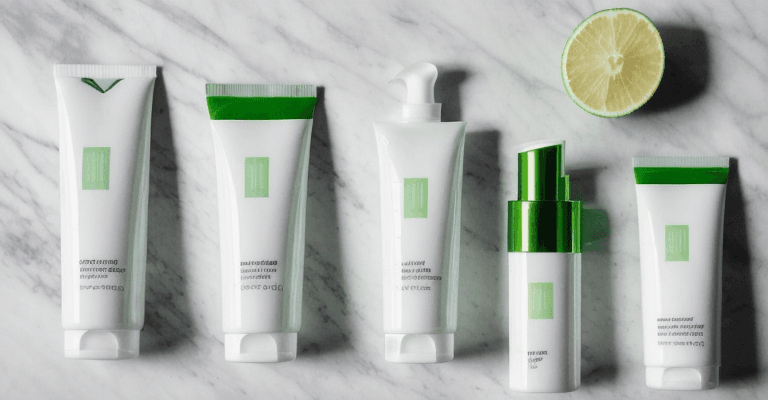
Sunscreen Application Science — SPF Math, Reapplication Intervals, and What Application Rate Actually Means
SPF protection curve showing diminishing returns from SPF 15 to 100, actual vs tested application rates, reapplication science with UV dose calculations, and the gap between laboratory SPF testing and real-world protection.
SPF 100 Blocks 99% of UVB. SPF 50 Blocks 98%. You’re Paying Double for 1% — Unless You Understand Why That 1% Matters
The SPF number on your sunscreen is simultaneously the most important and most misleading metric in personal care. It measures one thing precisely (UVB protection ratio at exactly 2 mg/cm² application rate in a laboratory) and implies something much broader (how much sun protection you actually get during a day at the beach). The gap between laboratory SPF and real-world protection is 40-80% — and that gap is almost entirely about application behavior, not product quality.
Laboratory SPF testing applies sunscreen at 2 mg/cm², which translates to approximately 1.2 mL (about ¼ teaspoon) for the face alone. Studies consistently show consumers apply 0.5-1.0 mg/cm² — one-quarter to one-half the tested amount. At half the tested application rate, SPF 50 delivers approximately SPF 7. Your SPF 50 sunscreen, applied the way you actually apply it, provides less protection than SPF 15 applied at the tested rate.
This is not a cosmetic issue. It is a cancer prevention issue. Melanoma incidence has increased 320% since 1975. The primary modifiable risk factor is UV exposure — and the primary gap in UV protection is not sunscreen formulation but sunscreen application.
The SPF protection curve — diminishing returns quantified
SPF is the ratio of UV dose required to produce erythema (sunburn) with sunscreen versus without. The UVB blocking percentage follows a hyperbolic curve: large gains at low SPF, vanishing gains at high SPF.
| SPF | UVB blocked (%) | UVB transmitted (%) | Relative protection vs SPF 15 | Marginal UVB blocked (vs previous tier) | Cost index (typical) |
|---|---|---|---|---|---|
| 2 | 50.0 | 50.00 | 0.13x | — | — |
| 8 | 87.5 | 12.50 | 0.53x | 37.5% | 0.6x |
| 15 | 93.3 | 6.67 | 1.00x (reference) | 5.8% | 1.0x |
| 30 | 96.7 | 3.33 | 2.00x | 3.4% | 1.2x |
| 50 | 98.0 | 2.00 | 3.33x | 1.3% | 1.5x |
| 70 | 98.6 | 1.43 | 4.67x | 0.6% | 1.8x |
| 100 | 99.0 | 1.00 | 6.67x | 0.4% | 2.5x |
The math reframe: Instead of “SPF 50 blocks 98% vs SPF 30 blocks 96.7%,” read it as “SPF 30 transmits 3.33% and SPF 50 transmits 2.00%.” SPF 50 allows 40% less UVB through than SPF 30. That 1.3 percentage-point difference in blocking becomes a 40% difference in transmission — and transmission is what damages DNA.
The application rate reality
| Application rate | % of tested rate (2 mg/cm²) | Effective SPF from labeled SPF 30 | Effective SPF from labeled SPF 50 | Effective SPF from labeled SPF 100 |
|---|---|---|---|---|
| 2.0 mg/cm² (lab standard) | 100% | SPF 30 | SPF 50 | SPF 100 |
| 1.5 mg/cm² | 75% | SPF 18-22 | SPF 28-35 | SPF 50-65 |
| 1.0 mg/cm² (typical “generous” application) | 50% | SPF 8-11 | SPF 12-16 | SPF 20-30 |
| 0.75 mg/cm² | 37.5% | SPF 5-7 | SPF 7-10 | SPF 12-18 |
| 0.5 mg/cm² (typical “normal” application) | 25% | SPF 3-5 | SPF 4-6 | SPF 6-10 |
The relationship is not linear. Halving the application rate does not halve the SPF — it follows an exponential decay. At 50% of the tested rate, SPF drops by approximately the square root of the labeled value. This is why dermatologists recommend SPF 50+ even if you “only need” SPF 30: the higher label compensates for real-world under-application.
Face application — what 2 mg/cm² actually looks like
The average adult face has a surface area of approximately 580-600 cm². At 2 mg/cm², the face alone requires:
| Body area | Surface area (adult avg) | Sunscreen needed at 2 mg/cm² | Visual reference | Common under-application |
|---|---|---|---|---|
| Face | 580 cm² | 1.2 mL (~¼ teaspoon) | Two-finger rule (two stripes along index + middle finger) | Most apply 0.3-0.6 mL (50-75% under) |
| Neck | 300 cm² | 0.6 mL | One-finger stripe | Often skipped entirely |
| Each arm | 1,100 cm² | 2.2 mL | Full palm puddle | Applied to visible surfaces only (miss inner arm) |
| Chest/décolletage | 650 cm² | 1.3 mL | Two fingers | Applied thinly; missed near collarbone |
| Back | 2,400 cm² | 4.8 mL | Golf ball (when someone else applies) | Self-application misses 30-40% of surface |
| Each leg | 2,200 cm² | 4.4 mL | Full palm, twice | Applied to front only (miss back of legs) |
| Full body | ~18,000 cm² | ~36 mL (~7 teaspoons) | Full shot glass | Average application is 15-20 mL (40-60% under) |
The two-finger rule for face: Squeeze sunscreen in two lines along your index and middle fingers (from base to tip). This approximates 1.0-1.2 mL — close to the tested application rate for the face. It feels like a lot. It is a lot. That is the correct amount.
Reapplication science — why every 2 hours, and when that changes
The 2-hour reapplication guideline is a simplification. The actual reapplication interval depends on UV intensity, activity, water/sweat exposure, and the specific filter system.
| Factor | Impact on protection duration | Mechanism | Adjusted reapplication interval |
|---|---|---|---|
| UV intensity (UV Index) | Higher UV = faster dose accumulation | Same SPF provides same ratio but absolute transmitted dose increases | UV 3-5: every 2.5-3 hours; UV 8-10: every 1.5-2 hours; UV 11+: every 1-1.5 hours |
| Water immersion | Removes 20-80% of sunscreen per immersion | Physical removal of product | Reapply immediately after swimming, regardless of “water resistant” label |
| Sweating (heavy exercise) | Removes 30-60% of sunscreen over 1-2 hours | Physical removal + dilution | Reapply every 60-90 minutes during heavy activity |
| Towel drying | Removes 40-85% of remaining sunscreen | Mechanical removal | Reapply after every towel dry |
| Photostability | Unstable filters (avobenzone alone) lose 50-90% efficacy in 1-2 hours | Photodegradation — UV energy breaks down the filter molecule | Unstable filters: every 1.5 hours. Photostable systems (Tinosorb, mineral): every 2-3 hours |
| Rubbing/touching face | Removes product mechanically | Physical disruption of sunscreen film | Avoid touching; reapply after significant rubbing |
Water resistance — what the labels actually mean
| Label claim | Testing standard | What it means | What it doesn’t mean |
|---|---|---|---|
| Water Resistant (40 minutes) | SPF measured after two 20-minute water immersions | Retains labeled SPF after 40 minutes in water | Does NOT mean full protection for 40 minutes — already declining during immersion |
| Water Resistant (80 minutes) | SPF measured after four 20-minute water immersions | Retains labeled SPF after 80 minutes in water | Not waterproof; protection declining throughout |
| ”Waterproof” | Term banned by FDA (2011) | N/A — no sunscreen is waterproof | Should not appear on US products; still appears on some international products |
| ”Sweatproof” | No standardized test | Marketing claim | No regulatory definition; cannot be verified |
| No water resistance claim | Not tested for water resistance | Unknown performance in water | May lose all protection after single immersion |
UVA vs UVB protection — the label doesn’t tell you half the story
SPF measures UVB protection only. UVA protection is measured separately and communicated differently depending on the regulatory system.
| UVA rating system | Where used | What it measures | How to interpret |
|---|---|---|---|
| PA+ to PA++++ | Japan, Korea, Asia | PPD (Persistent Pigment Darkening) — UVA dose to darken skin | PA+: PPD 2-4; PA++: PPD 4-8; PA+++: PPD 8-16; PA++++: PPD 16+ |
| UVA circle logo | EU | Critical wavelength ≥370 nm AND UVA PF ≥ 1/3 of SPF | Pass/fail — no graded rating. Products either qualify or don’t |
| Broad Spectrum | US (FDA) | Critical wavelength ≥370 nm | Pass/fail with low bar — SPF 15 with broad spectrum may have PPD 2-3 (minimal UVA protection) |
| UVA-PF (PPD) | EU (some brands voluntarily declare) | Persistent pigment darkening factor | Equivalent to SPF but for UVA. PPD 20 = 95% UVA blocked |
| Boots Star Rating | UK | UVA/UVB protection ratio | 3 stars: moderate. 4 stars: good. 5 stars: UVA PF ≥ 90% of SPF |
The US label gap: A US sunscreen labeled “SPF 50 Broad Spectrum” meets a minimum UVA threshold (critical wavelength ≥370 nm) but may have UVA protection equivalent to only PPD 8-12. A European or Japanese sunscreen labeled “SPF 50 PA++++” has UVA protection of PPD 16+. The US “Broad Spectrum” label sets a floor so low that it obscures the substantial UVA protection differences between products.
The UV dose calculation — when you’ve used up your protection
Protection is not about time — it is about UV dose. The same SPF lasts longer at 8 AM than at noon because UV intensity differs.
| UV Index | UV intensity category | Approx. MED for skin type II (minutes, no sunscreen) | With SPF 30 (at tested rate) | With SPF 50 (at tested rate) | With SPF 30 (at 50% rate, eff. SPF ~10) |
|---|---|---|---|---|---|
| 1-2 | Low | 60+ minutes | 1,800+ min (irrelevant — low risk) | 3,000+ min | 600+ min |
| 3-5 | Moderate | 25-40 minutes | 750-1,200 min | 1,250-2,000 min | 250-400 min |
| 6-7 | High | 15-25 minutes | 450-750 min | 750-1,250 min | 150-250 min |
| 8-10 | Very high | 10-15 minutes | 300-450 min | 500-750 min | 100-150 min |
| 11+ | Extreme | <10 minutes | <300 min | <500 min | <100 min |
The real-world calculation: At UV Index 8, skin type II burns in ~12 minutes unprotected. With SPF 50 applied at the tested rate, that extends to ~600 minutes. But at 50% application rate (effective SPF ~12), that drops to ~144 minutes — about 2.4 hours. Add sweating, touching your face, and photodegradation of unstable filters, and real-world protection at UV Index 8 may last 60-90 minutes before reapplication is needed.
Application technique comparison
| Technique | Coverage uniformity | Amount applied | SPF achieved vs label | Practical rating |
|---|---|---|---|---|
| Dots-and-spread (dots on forehead, cheeks, nose, chin → spread) | Moderate (60-80% uniform) | Usually under-applies (0.7-1.0 mg/cm²) | 40-65% of label | Common but suboptimal |
| Two-finger rule + systematic spread | Good (75-90% uniform) | Close to tested rate (1.0-1.5 mg/cm²) | 65-85% of label | Recommended for daily use |
| Two-layer method (apply, wait 2 min, reapply) | Excellent (85-95% uniform) | Close to or exceeds tested rate | 85-100% of label | Best for high-UV situations |
| Spray application (body) | Poor (40-60% uniform) | Highly variable — mist doesn’t adhere evenly | 30-50% of label | Convenient but inadequate alone |
| Spray + rub-in | Moderate-good (60-80% uniform) | Better than spray alone | 50-70% of label | Acceptable for body; insufficient for face |
| Stick application | Good on small areas | Usually adequate per pass | 70-90% of label (on covered area) | Good for ears, nose, lips; impractical for large areas |
How to apply this
Use the ingredient-checker tool to check your sunscreen’s UV filter system — photostable filter systems (Tinosorb, mineral filters, stabilized avobenzone) maintain protection longer between reapplications than unstable systems.
Use SPF 50+ to compensate for inevitable under-application. If you apply sunscreen like a normal human (not a lab technician), SPF 50 at your actual application rate delivers approximately what SPF 15 delivers at the tested rate. SPF 50 is the real-world minimum, not SPF 30.
Master the two-finger rule for your face. Two stripes of sunscreen along your index and middle fingers approximates the correct amount. It feels excessive. It is correct.
Reapply based on UV dose, not a clock. At UV Index 3, every 3 hours is reasonable. At UV Index 8+, every 90 minutes — and immediately after swimming or towel drying.
Look for PA++++ or declared UVA-PF, not just “Broad Spectrum.” The US Broad Spectrum label is a minimum threshold, not a quality indicator. Asian and European sunscreens with PA++++ or declared PPD 16+ provide meaningfully better UVA protection.
Honest limitations
SPF-to-effective-SPF conversions at sub-tested application rates are based on mathematical modeling (Beer-Lambert law extrapolation and Mansur equation) and a limited number of in vivo studies — individual variation in skin thickness, oiliness, and sweating affects actual protection. The two-finger rule is an approximation that varies with finger size, product viscosity, and tube opening diameter. Water resistance testing uses controlled pool conditions — ocean swimming with sand, salt, and wave impact likely removes more sunscreen than laboratory conditions suggest. UV Index values vary hour-to-hour and are forecasts, not real-time measurements — actual UV exposure depends on cloud cover, altitude, reflection, and shade. MED values vary significantly across individuals within the same skin type (Fitzpatrick scale is a simplification). UVA protection testing (PPD) is less standardized than SPF testing — results can vary 20-30% across testing facilities. The relationship between sunscreen use and melanoma prevention is confounded by sun-seeking behavior — higher SPF users may spend more time in sun, partially offsetting protection gains.

Continue reading
AHA vs BHA — Glycolic, Salicylic, Lactic Acid Compared by Molecular Size, Penetration, and Evidence
Chemical exfoliant comparison by molecular weight, penetration depth, optimal pH and concentration, evidence per skin concern, combination safety matrix, and the over-exfoliation threshold that most routines exceed.
Ceramides and Barrier Repair — Lipid Ratios, Barrier Function Science, and What 'Ceramide Complex' Actually Means
Skin barrier lipid ratio table showing optimal ceramides-to-cholesterol-to-fatty-acids proportions, ceramide classification by type, barrier damage markers, repair timeline data, and the evidence gap between ceramide marketing and clinical barrier restoration.
Dental Product Ingredients — Fluoride Concentrations, Whitening Agents, and the Evidence Behind Every Claim
Fluoride concentration comparison between OTC and prescription products in ppm, whitening agent efficacy data with shade change measurements, sensitivity ingredient mechanisms, and the evidence gap between dental product marketing and clinical outcomes.