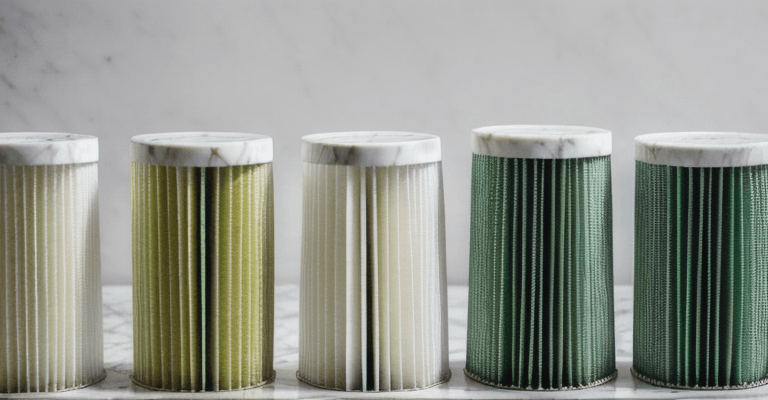
Water Filtration Systems Compared — Contaminant Removal Matrix, Filter Lifespan, and What Each Technology Actually Removes
Filtration method comparison across 20 contaminants with removal percentages, NSF certification standards, filter lifespan data, cost-per-gallon analysis, and the contaminant-specific decision framework for choosing the right system.
Your Water Filter Removes Chlorine Taste — but Not the Lead, PFAS, or Nitrates That Actually Pose Health Risks
The most popular water filters in American homes are activated carbon pitchers and faucet-mount filters. These do exactly one thing well: they remove chlorine taste and odor. They do it effectively and affordably. The problem is that consumers believe they are also removing lead, PFAS, pesticides, microplastics, and whatever contaminant was in last week’s news cycle. Most carbon pitcher filters are not certified to remove any of these.
Water filtration is not a single technology. It is at least six distinct technologies, each with a different removal mechanism, different contaminant targets, and different failure modes. A carbon block filter and a reverse osmosis membrane operate on entirely different physical principles. An ion exchange resin and a UV disinfection system address entirely different classes of contaminants. Choosing a filter without knowing what is in your water is buying medicine without a diagnosis.
The first step is always a water quality report — either your utility’s annual Consumer Confidence Report (CCR) or a private lab test if on well water. The filter choice follows from what needs to be removed.
Filtration technology overview — how each method works
| Technology | Mechanism | What it removes | What it does NOT remove | Typical format | NSF Standard |
|---|---|---|---|---|---|
| Granular activated carbon (GAC) | Adsorption — contaminants bind to carbon surface | Chlorine taste/odor, some VOCs, some pesticides | Lead, PFAS, fluoride, nitrates, bacteria, dissolved minerals | Pitcher filters, refrigerator filters | NSF 42 (aesthetic) |
| Carbon block | Adsorption + mechanical filtration (compressed carbon with smaller pore size) | Chlorine, lead (if certified), cysts, some VOCs, turbidity | PFAS (most), fluoride, nitrates, TDS, bacteria, viruses | Faucet-mount, under-sink, some pitchers | NSF 42 + NSF 53 (health) |
| Reverse osmosis (RO) | Semi-permeable membrane — rejects molecules larger than ~0.0001 microns | 95-99% of dissolved solids: lead, arsenic, fluoride, nitrates, PFAS, radium, chromium-6 | Chlorine (pre-filter needed), some dissolved gases, requires pre-treatment | Under-sink (with tank), countertop, whole-house | NSF 58 |
| Ion exchange resin | Selective ion swap — trades target ions for harmless ions (Na⁺ or H⁺) | Water hardness (Ca²⁺/Mg²⁺), lead, barium, radium, some PFAS (anion exchange) | Bacteria, viruses, most VOCs, turbidity | Whole-house softeners, specialty cartridges | NSF 44 (softening), NSF 53 (lead) |
| Distillation | Evaporation + condensation — leaves contaminants behind | Nearly everything: heavy metals, dissolved solids, bacteria, viruses, nitrates | VOCs with boiling points below water (some may carry over) | Countertop distillers | NSF 62 |
| UV disinfection | Ultraviolet light damages DNA — prevents reproduction | Bacteria, viruses, protozoa (99.99% with adequate dose) | Nothing chemical — no removal of lead, PFAS, VOCs, dissolved solids | Point-of-entry, under-sink add-on | NSF 55 (Class A: 40 mJ/cm²) |
| KDF (kinetic degradation fluxion) | Electrochemical oxidation-reduction using copper-zinc granules | Chlorine, hydrogen sulfide, some heavy metals (lead, mercury), bacteria growth inhibition | PFAS, nitrates, fluoride, most VOCs | Shower filters, whole-house pre-filters | NSF 42 (some models) |
| Ceramic | Mechanical filtration through microporous ceramic (0.2-0.5 microns) | Bacteria, protozoa, sediment, turbidity | Viruses (too small), dissolved chemicals, PFAS | Gravity-fed systems (e.g., Berkey-type), candle filters | NSF 42 (some models) |
Contaminant × filtration method removal matrix
| Contaminant | GAC (Pitcher) | Carbon Block | Reverse Osmosis | Ion Exchange | Distillation | UV | Ceramic | Health concern level |
|---|---|---|---|---|---|---|---|---|
| Chlorine (taste/odor) | >95% | >95% | 95%+ (pre-filter) | Minimal | 95%+ | None | None | Low (aesthetic) |
| Lead | 0-30% | 95-99% (NSF 53 certified) | 95-99% | 95-99% (specific resins) | 99%+ | None | None | High (neurotoxic) |
| PFAS (PFOA/PFOS) | 30-70% (variable) | 50-90% (depends on carbon type) | 90-99% | 90-99% (anion exchange) | 99%+ | None | None | High (endocrine, cancer) |
| Arsenic | 10-40% | 40-80% | 90-99% | 80-95% (specific media) | 99%+ | None | None | High (carcinogen) |
| Fluoride | 0% | 0-10% | 90-95% | 80-90% (activated alumina) | 99%+ | None | None | Moderate (above 4 ppm) |
| Nitrate | 0% | 0% | 85-95% | 90-95% (anion exchange) | 99%+ | None | None | High (methemoglobinemia in infants) |
| Mercury | 50-80% | 90-95% | 95-99% | 70-90% | 99%+ | None | None | High (neurotoxic) |
| Chromium-6 | 10-30% | 30-70% | 90-95% | 60-90% | 99%+ | None | None | High (carcinogen) |
| Disinfection byproducts (THMs) | 60-90% | 80-95% | 70-90% | Minimal | 80-95% | None | None | Moderate (cancer risk) |
| Pesticides/herbicides | 50-80% | 70-95% | 90-99% | Minimal | Varies (VOC dependent) | None | None | Moderate-high |
| VOCs (general) | 50-80% | 70-95% | 50-80% (depends on MW) | Minimal | Variable (some carry over) | None | None | Varies by compound |
| Microplastics | Variable (depends on pore size) | 80-95% | 99%+ | Minimal | 99%+ | None | 95-99% | Emerging concern |
| Bacteria (E. coli, Legionella) | 0% | 0-50% (mechanical only) | 99%+ | 0% | 99.9%+ | 99.99% | 99.9%+ | High (infection) |
| Viruses | 0% | 0% | 99%+ | 0% | 99.9%+ | 99.99% | 0% (too small) | High (infection) |
| Protozoa (Giardia, Cryptosporidium) | 0% | 99%+ (≤1 µm pore) | 99%+ | 0% | 99.9%+ | 99.99% | 99.9%+ | High (infection) |
| Hardness (Ca/Mg) | 0% | 0% | 90-95% | 99% (softener) | 99%+ | None | None | Low (aesthetic/scale) |
| Iron | 10-30% | 30-60% | 90-95% | 80-95% (specific media) | 99%+ | None | 50-80% | Low-moderate |
| Radium | 0-10% | 20-50% | 90-95% | 90-99% (cation exchange) | 99%+ | None | None | High (carcinogen) |
| Chloramine | 20-50% (slower than chlorine) | 60-90% (catalytic carbon) | 90-95% | Minimal | 95%+ | None | None | Low-moderate |
| TDS (total dissolved solids) | 0% | 0% | 85-97% | Varies | 99%+ | None | None | Low (aesthetic except extremes) |
Reading the matrix: A “0%” means the technology has no mechanism to remove that contaminant. A range (e.g., “50-80%”) reflects variation across product quality, water chemistry, filter age, and flow rate. Certified removal rates (NSF-tested) are typically at the high end of these ranges; uncertified products may fall at the low end or below.
NSF certification standards — what they mean
| NSF Standard | What it certifies | Key contaminants tested | What it does NOT certify | Products requiring this |
|---|---|---|---|---|
| NSF 42 | Aesthetic improvement (taste, odor, clarity) | Chlorine taste/odor, particulate (Class I: 0.5-1 µm) | No health claims; does not test for lead, PFAS, or other health contaminants | All pitcher filters, basic faucet-mount |
| NSF 53 | Health effects — contaminant reduction | Lead, cyst (Giardia/Crypto), VOCs, MTBE, turbidity, asbestos, mercury | Does not test for PFAS unless specifically listed; does not test for nitrate or fluoride | Under-sink, premium faucet-mount |
| NSF 58 | Reverse osmosis systems | TDS, lead, fluoride, nitrate, arsenic, radium, chromium-6, cyst | Individual contaminant claims must be tested specifically | RO systems (under-sink, countertop) |
| NSF 401 | Emerging contaminants | Pharmaceuticals, pesticides, herbicides, PFOA/PFOS, BPA | Not all emerging contaminants — only those specifically tested | Premium filters marketing emerging contaminant removal |
| NSF P473 | PFOA and PFOS specifically | PFOA, PFOS (at 70 ppt per EPA health advisory) | Does not cover all PFAS — only the two most studied | Filters making PFAS removal claims |
| NSF 55 | UV microbiological treatment | Class A: bacteria, viruses, cysts (disinfection); Class B: supplemental treatment only | No chemical contaminant removal | UV systems |
| NSF 44 | Cation exchange water softeners | Hardness (Ca/Mg) removal; barium and radium (optional claims) | No PFAS, lead (different mechanism), or other health contaminants | Whole-house softeners |
The certification gap: A filter can be “NSF certified” to NSF 42 only — meaning it is certified to improve taste and smell, period. Manufacturers place “NSF Certified” prominently on packaging without clarifying which standard. A consumer seeing “NSF Certified” may assume health-contaminant removal when only aesthetic improvement was tested. Always check which specific NSF standard(s) the certification covers.
Cost comparison — purchase price, operating cost, cost per gallon
| System type | Purchase price | Annual filter/maintenance cost | Lifespan (system) | Filter life | Gallons per filter | Cost per gallon (filtered) | Water waste |
|---|---|---|---|---|---|---|---|
| Pitcher (GAC) | $20-40 | $40-80 (4-6 filters/year) | 1-3 years | 40-100 gallons | 40-100 | $0.15-0.40 | None |
| Faucet-mount (carbon block) | $20-50 | $30-60 (2-3 filters/year) | 2-4 years | 100-200 gallons | 100-200 | $0.10-0.25 | None |
| Under-sink (carbon block) | $50-200 | $30-80 (1-2 filters/year) | 5-10 years | 500-1000 gallons | 500-1000 | $0.05-0.15 | None |
| Under-sink RO | $150-500 | $50-150 (pre-filters + membrane) | 10-15 years | Pre: 6-12 mo; membrane: 2-5 years | 1000-3000 (membrane) | $0.03-0.10 | 2-4 gallons per 1 gallon produced (75-80% waste) |
| Countertop RO | $300-600 | $40-100 | 5-10 years | 6-12 months | 500-1500 | $0.05-0.15 | 1-3 gallons per 1 gallon (newer models more efficient) |
| Whole-house carbon | $300-1500 | $100-300 | 10-20 years | 6-12 months (cartridge) or 3-5 years (media tank) | Whole-house throughput | $0.01-0.05 | None |
| Whole-house softener | $500-2500 | $50-150 (salt) | 10-20 years | N/A (regenerating) | N/A | $0.01-0.03 | 50-100 gallons per regeneration cycle |
| Countertop distiller | $100-400 | $10-30 (descaling, carbon post-filter) | 5-15 years | Carbon: 1-3 months | N/A (batch process) | $0.25-0.50 (including electricity) | None (but slow: 1 gallon per 4-6 hours) |
| UV system | $100-500 | $30-80 (lamp replacement annual) | 10-15 years | UV lamp: 12 months; sleeve: 2-3 years | N/A (flow-through) | $0.02-0.05 | None |
| Gravity-fed ceramic | $100-400 | $30-60 (ceramic elements 1-2/year) | 10-20 years | 6-12 months per element | 1000-3000 | $0.02-0.08 | None |
The RO waste water problem: Traditional under-sink RO systems waste 3-4 gallons of water for every 1 gallon of filtered water produced (75-80% recovery ratio). Newer “tankless” RO systems achieve 50-60% recovery (1-2 gallons waste per gallon produced). In drought-prone areas or on well water, this waste is a significant operational consideration. The waste water contains concentrated contaminants and is typically sent to drain — it can be redirected to garden use if not containing hazardous concentrations.
Decision framework — which filter for which problem
| Your situation | Your contaminant concern | Recommended system | Why | NSF certification to verify |
|---|---|---|---|---|
| Municipal water, taste only | Chlorine taste/odor | Carbon pitcher or faucet-mount | Cheapest effective solution; chlorine is the primary taste issue | NSF 42 |
| Municipal water, lead concern (old pipes) | Lead | Under-sink carbon block (NSF 53 for lead) or RO | Carbon block certified for lead is cheaper; RO is more comprehensive | NSF 53 (lead claim) or NSF 58 |
| Municipal water, PFAS concern | PFAS (PFOA/PFOS + emerging PFAS) | RO or anion exchange specialty filter | RO removes 90-99%; anion exchange is PFAS-specific; GAC is inconsistent | NSF P473 or NSF 58 |
| Well water, bacteria/coliform positive | Bacteria, possible viruses | UV disinfection (Class A) + sediment pre-filter | UV kills microorganisms without chemicals; must be Class A (40 mJ/cm²) | NSF 55 Class A |
| Well water, nitrate above MCL | Nitrate >10 mg/L | RO or anion exchange | Carbon filters do not remove nitrate at all | NSF 58 (nitrate claim) |
| Well water, arsenic detected | Arsenic >10 ppb | RO or specialty adsorptive media | RO is most reliable; specialty media (iron-based) is alternative | NSF 53 (arsenic claim) or NSF 58 |
| Hard water (scale, soap issues) | Calcium, magnesium | Ion exchange water softener | Only technology that effectively removes hardness whole-house | NSF 44 |
| Maximum protection, budget allows | Everything | Whole-house sediment + carbon → under-sink RO + UV | Layered approach removes all categories | NSF 42 + 53 + 58 + 55 |
| Emergency/travel, biological concern | Bacteria, protozoa | Gravity-fed ceramic or portable UF membrane | No electricity required; mechanically removes pathogens | NSF 42 + manual verification of pore size (<0.2 µm) |
How to apply this
Use the ingredient-checker tool to identify contaminants of concern — enter chemicals from your water quality report to understand which filtration technology addresses each one.
Get your water tested first. Municipal water: request your utility’s annual Consumer Confidence Report (CCR) — it is free and legally required. Well water: test annually for bacteria, nitrate, pH, and TDS; test every 3-5 years for heavy metals, arsenic, and PFAS. Private lab tests cost $30-300 depending on the panel.
Match the filter to the contaminant. A pitcher filter is sufficient if chlorine taste is your only concern. It is insufficient if your water contains lead, PFAS, or nitrate. Do not buy a $400 RO system for chlorine taste; do not trust a $25 pitcher for lead.
Verify NSF certification claims. Check the NSF International database (nsf.org) for the specific product model and the specific contaminants it is certified to remove. “NSF certified” without a standard number is a marketing claim, not a performance guarantee.
Replace filters on schedule. An exhausted carbon filter provides zero protection — worse, it can release previously adsorbed contaminants back into the water (breakthrough). Set calendar reminders based on the manufacturer’s gallon rating or time interval, whichever comes first.
Honest limitations
Removal percentages are based on NSF test protocols using standardized challenge water — actual performance varies with your water chemistry (pH, temperature, competing contaminants, turbidity). Filter lifespan depends on incoming water quality; heavily contaminated water exhausts filters faster than the manufacturer’s rating. RO membrane rejection rates decline over time (membrane fouling); the 95-99% removal rate is for new membranes under test conditions. PFAS removal data is evolving — NSF P473 tests only PFOA and PFOS, not the 5000+ other PFAS compounds; removal of short-chain PFAS (PFBS, PFHxS) by carbon is significantly worse than long-chain compounds. Consumer lab tests ($30-150) have higher detection limits than reference labs ($200-500+); a “non-detect” on a consumer test means below the detection limit, not zero. UV disinfection requires clear water (turbidity <1 NTU) — cloudy water shields pathogens from UV light. Whole-house systems require professional installation and may not be feasible in rental properties. Cost per gallon calculations exclude installation costs and assume filter changes at rated intervals. Ion exchange softeners add sodium to water (~8 mg/L per grain of hardness removed); this may be medically relevant for sodium-restricted diets. Gravity-fed ceramic systems (e.g., Berkey-type) have faced regulatory scrutiny — some models have not undergone independent NSF testing despite marketing claims.

Continue reading
Allergen Management at Home — Intervention Efficacy by Allergen Type, Evidence Ratings, and the Hierarchy That Determines What Actually Reduces Symptoms
Intervention efficacy table with evidence rating per allergen type, dust mite control protocols, pet allergen persistence data, mold and pollen management, encasement effectiveness data, and the cost-benefit analysis of allergen reduction strategies.
Cleaning Product Efficacy — Contact Time, Dilution Ratios, and the Kill Rates That Separate Disinfection from Wet Wiping
EPA-registered disinfectant contact time table by pathogen type, active ingredient comparison with kill spectra, dilution ratio science, chemical interaction hazards, surface compatibility matrix, and the evidence behind cleaning frequency recommendations.
HEPA Filter Guide — True HEPA vs HEPA-Type, CADR Calculations, and the Air Purifier Math Most Manufacturers Hide
HEPA classification standards with filtration efficiency curves, CADR-to-room-size calculation tables, ACH targets per use case, filter type comparison with lifespan data, and the noise-versus-performance tradeoff that determines real-world air purifier effectiveness.